

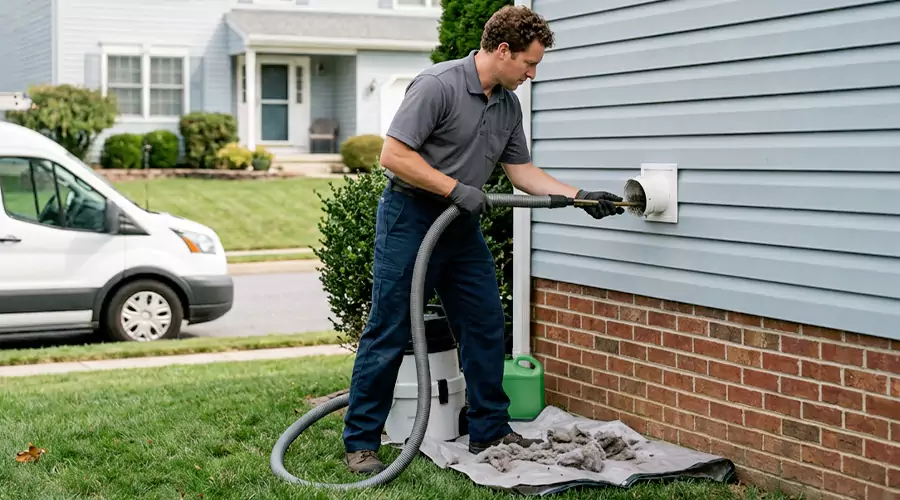
Under the standard method in the 2024 International Residential Code (IRC), a residential dryer exhaust duct can be up to 35 feet long before accounting for the airflow resistance created by elbows and fittings. The permitted length may be different when the dryer manufacturer's installation instructions specify an approved alternative. The flexible transition duct connecting the appliance to the permanent exhaust system has a separate maximum of eight feet.
Dryer vent length is important because conventional clothes dryers rely on airflow to remove moisture and heat. As exhaust air travels through ducts and bends, resistance increases. An excessively long or poorly designed route can reduce airflow and make clothes take longer to dry. Professional air duct replacement can help restore proper airflow when HVAC ductwork is damaged, deteriorated, or no longer suitable for the system.
The correct vent length depends on the dryer model, duct material, number of elbows, and applicable local mechanical code. A straight exhaust passage can generally extend farther than one containing several sharp turns. Understanding how vent length is calculated helps homeowners avoid installation problems and recognize when an existing exhaust route needs modification.
What Is the Maximum Dryer Vent Length?
The 2024 IRC provides several approved methods for determining maximum dryer exhaust duct length. Under its standard specified-length method, the maximum is 35 feet from the connection with the appliance transition duct to the outdoor termination. Elbow deductions reduce the available straight length.
Alternatively, the dryer's installation instructions may specify a model-specific maximum. The code also provides a separate method for an approved dryer exhaust duct power ventilator.
| Installation Condition | Length Requirement |
|---|---|
| Standard IRC method | 35 feet before fitting deductions |
| One typical mitered 90-degree elbow | Deduct 5 feet |
| One typical mitered 45-degree elbow | Deduct 2.5 feet |
| Manufacturer-based method | Follow the approved model instructions |
| Flexible appliance transition | Maximum 8 feet under the IRC |
| Approved power-ventilated exhaust | Follow the listed system's instructions |
These values apply to the relevant IRC provisions. Local jurisdictions may adopt different code editions or amendments.
How Do Dryer Vent Elbows Affect Maximum Length?
Every elbow changes airflow direction and introduces additional resistance. Mechanical codes account for this using equivalent duct length. The equivalent length represents the resistance associated with a fitting expressed as an additional length of straight duct.
The 2024 IRC provides different values for various elbow shapes. A typical four-inch-radius mitered 90-degree elbow counts as five feet, while a comparable 45-degree elbow counts as 2.5 feet. Smooth, long-radius elbows can have lower equivalent-length values than sharp mitered fittings.
Dryer Vent Length Calculation Examples
| Duct Configuration | Maximum Straight Length Under the Standard Method |
|---|---|
| No elbows | 35 feet |
| One mitered 90-degree elbow | 30 feet |
| Two mitered 90-degree elbows | 25 feet |
| Three mitered 90-degree elbows | 20 feet |
| Two mitered 90-degree elbows and one mitered 45-degree elbow | 22.5 feet |
These calculations assume the specific mitered fittings described above. Other elbows may have different deductions, and appliance instructions may establish a different permitted route.
The objective is to keep the total equivalent length within the applicable limit.
How Do You Measure Dryer Vent Length?
Measure the permanent exhaust duct from its connection with the appliance transition to the outside termination. Follow the actual duct route rather than measuring the shortest distance between the dryer and exterior wall. Include the straight duct sections and identify each elbow.
Next, determine the equivalent length for every fitting using the applicable table or manufacturer instructions. Add the fitting allowances to the measured straight duct length. The result must be within the permitted total equivalent length.
For example, a 20-foot straight run with two standard mitered 90-degree elbows has an equivalent length of 30 feet. Under the standard 35-foot method, that configuration would fall within the limit.
Does the Flexible Dryer Vent Hose Count Toward the 35 Feet?
Under the 2024 IRC's standard specified-length method, the appliance transition duct is excluded from the permanent exhaust duct's 35-foot calculation. However, that does not mean the transition can be any length.
The code requires a single continuous transition duct listed and labeled to UL 2158A, with a maximum length of eight feet. It must remain accessible and cannot be concealed inside walls or ceilings. Manufacturer instructions may require a shorter connection. Keep the transition as short and direct as practical to avoid unnecessary resistance.
What Is the Best Dryer Vent Length?
The best dryer vent route is generally the shortest practical path to an approved outdoor termination. Whirlpool recommends keeping dryer venting short and straight, with as few elbows as possible. Longer runs and additional bends can increase resistance, reduce drying performance, and encourage lint accumulation. Air duct cleaning near me can help homeowners find local professionals who remove accumulated dust and debris from HVAC ductwork to support cleaner airflow and system efficiency.
A dryer positioned near an exterior wall may need only a short exhaust route. A laundry room located near the center of a house may require a longer passage through a basement or ceiling. The route should be designed around the manufacturer's requirements rather than extended simply because the building has available space.
Can a Dryer Vent Be Longer Than 35 Feet?
Yes, in certain approved installations. The 2024 IRC permits the maximum exhaust duct length to be determined using the dryer manufacturer's installation instructions. Some dryers are specifically designed for longer exhaust configurations. The code also provides a method involving a listed dryer exhaust duct power ventilator installed according to its manufacturer's instructions.
However, an ordinary ventilation fan should not be installed inside a dryer exhaust duct as an improvised solution. The 2024 IRC distinguishes approved dryer exhaust duct power ventilators from prohibited general booster fans. A qualified contractor should determine whether the selected equipment and local code allow a longer route.
Can a Dryer Vent Run Vertically?
Yes. A properly designed dryer exhaust duct can travel vertically through an approved building passage. Vertical routes are common in upper-floor laundry rooms and certain multistory buildings. However, the complete route must meet length, material, and termination requirements.
A vertical run may be more difficult to inspect, particularly when it terminates through the roof. Use approved smooth metal ducting and suitable supports. The installation should also provide a practical method for future cleaning. A shorter exterior-wall route may be preferable when one is available.
Does Dryer Vent Diameter Affect the Length?
Most conventional residential dryers are designed for a nominal four-inch exhaust duct. The 2024 IRC generally requires a smooth metal duct with a four-inch nominal diameter under its standard provisions. Using an undersized exhaust passage increases resistance and may cause longer drying times.
Whirlpool also warns that using an inappropriate duct diameter can reduce airflow. Do not increase or decrease the duct size without checking the appliance instructions and applicable requirements. A larger duct is not automatically an acceptable substitute for an approved four-inch exhaust system.
What Happens if a Dryer Vent Is Too Long?
An excessively long exhaust route can prevent the dryer from moving enough air.
Possible warning signs include:
- Clothes requiring multiple drying cycles.
- Excessive heat around the dryer.
- Weak exhaust airflow outside.
- Moisture remaining in clothing.
- Lint accumulating more quickly.
- Restricted-airflow warning messages.
- Unexpected dryer shutdowns.
- Higher energy use from longer cycles.
A long duct is not the only possible cause of these symptoms. Lint blockage, crushed connections, and appliance faults can produce similar problems. If the dryer becomes unusually hot or produces a burning smell, stop using it until the condition has been investigated.
How Can You Reduce Dryer Vent Length?
Begin by evaluating whether the dryer can connect to a closer exterior termination. Eliminating unnecessary elbows can reduce equivalent duct length without relocating the appliance. A suitable long-radius fitting may also reduce resistance compared with a sharp elbow.
A qualified installer may recommend rerouting the permanent metal exhaust duct through a more direct passage. Avoid compressing flexible materials to create additional room behind the dryer. The transition should retain its intended shape without sharp bends. The revised installation must still meet the manufacturer's requirements and local code.
How Often Should Long Dryer Vents Be Cleaned?
The U.S. Fire Administration recommends annual dryer vent duct cleaning. Long or complicated routes may need closer monitoring, particularly when the dryer is used frequently. Whirlpool recommends cleaning household venting every one to two years or sooner when drying performance declines, depending on usage and other conditions. Annual cleaning is a practical general fire-safety schedule. Do not postpone inspection when warning signs appear.
Conclusion
The standard 2024 IRC dryer exhaust length limit is 35 feet before accounting for elbow resistance. Mitered elbows reduce the available straight length, while manufacturer-approved systems may permit different configurations. The appliance transition has a separate eight-foot maximum and must remain accessible. Short, direct metal exhaust routes generally provide better airflow and easier maintenance. Always calculate equivalent length and follow the dryer manufacturer's installation instructions before approving a new vent route.